

Accelerating knowledge and skills acquisition
among current and future finance professionals
is an important lever to accelerate the financial flow of funds
towards for biodiversity-linked activities.
Overview
Reversing biodiversity loss is no longer only an environmental challenge—it is a financial one. At a time when global funding for biodiversity falls far short of estimated needs, strengthening financial literacy on nature is a critical lever to unlock and redirect capital at scale.
Why it matters
Global biodiversity is declining at an unprecedented rate
The global economic impact of biodiversity loss amounts to $10 trillion (USD) annually
An estimated $824 billion (USD) needed to protect and restore nature annually
Resources
Glossary for Biodiversity and Nature-Based Solutions
Discover the core topics, trends, and interconnections that support a better understanding of biodiversity, nature-based solutions (NbS), and the critical role of finance in enabling their implementation.
While not intended to be an exhaustive list, this glossary offers a flexible and adaptable content that you are encouraged to tailor to your disciplinary or professional focus.
Biodiversity & Nature-Based Solutions
Financing
Nature-Based
Solutions
Education as a Lever for Biodiversity and Nature-based Solutions
Download the .pdf version of the Glossary
Case studies
Integrating biodiversity and environmental challenges within finance and business education often presents a discipline-fit challenge. The selection of case studies below, developed by BIOFIN-EU, aim to facilitate the integration of these vital themes in core finance education modules.
Recommended resources to learn more
A rich array of resources exist to deepen your understanding of biodiversity, nature-based solutions and the role of finance. Below you will find a curated selection for your first steps.
Playlist
2:59

3:01
35:04
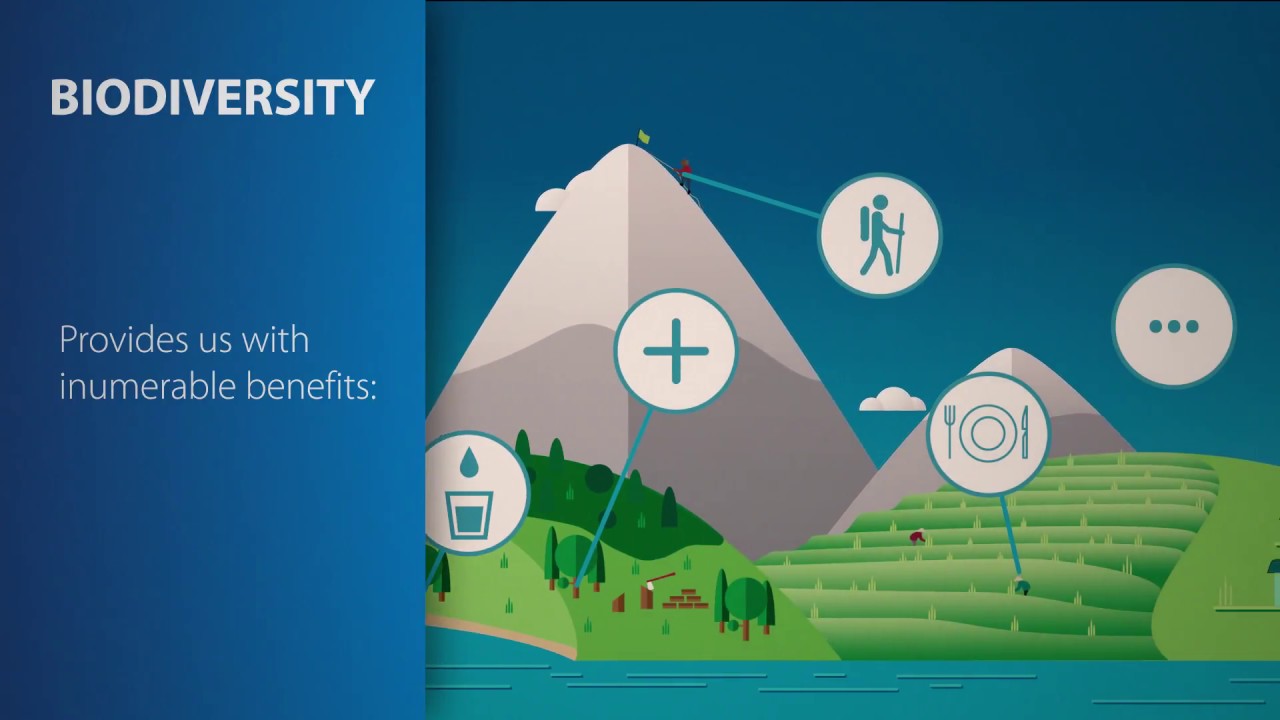
A short explainer highlighting the importance of biodiversity finance and how UNDP BIOFIN works with governments to close the biodiversity funding gap.
A video showcasing the BIOFIN-EU project and how it aims to shift financial flows away from activities that harm nature and direct them toward biodiversity-positive solutions.
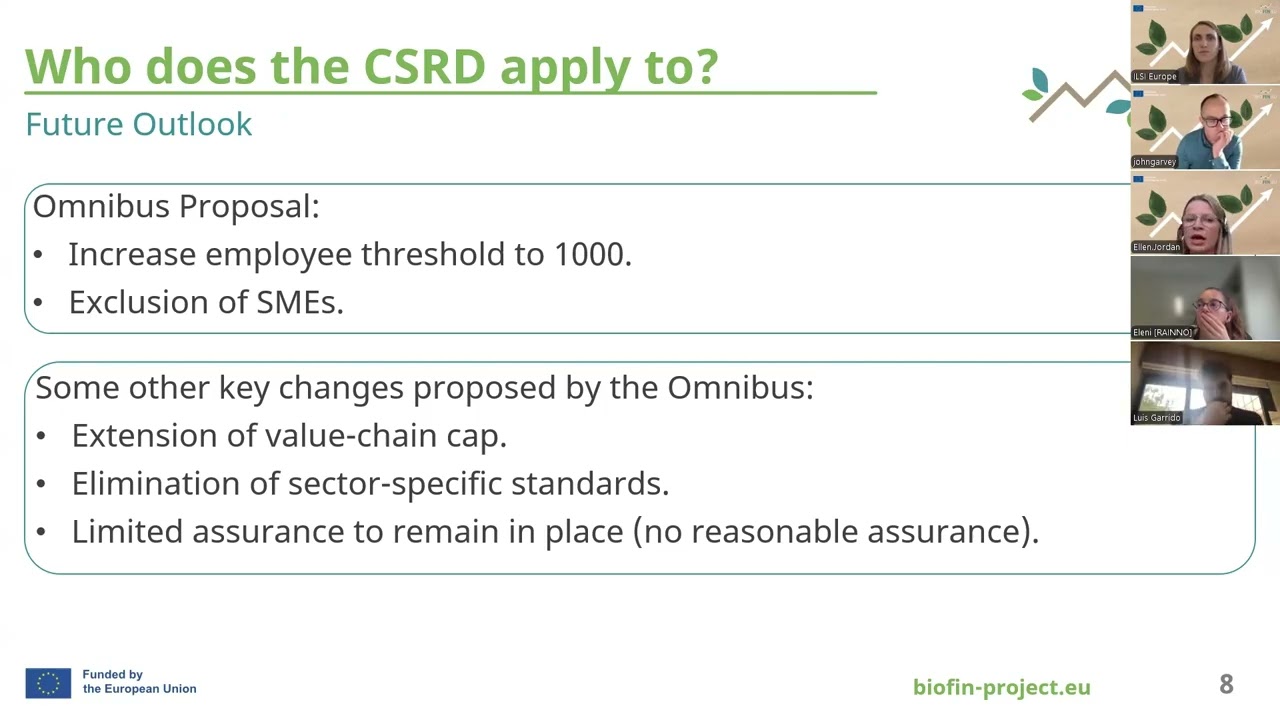
A webinar recording exploring how evolving EU sustainability regulations —such as the Corporate Sustainability Reporting Directive (CSRD) and Corporate Sustainability Due Diligence Directive (CS3D)— are reshaping corporate reporting practices.
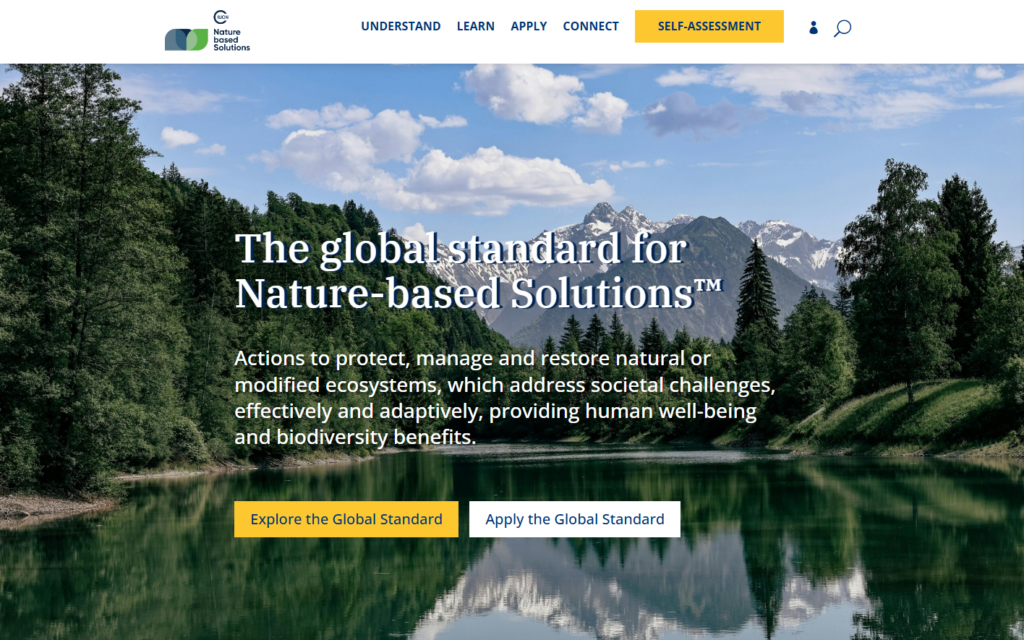
The IUCN Nature-based Solutions (NbS) platform is a global resource hub that provides guidance, standards, and practical tools to design, implement, and scale nature-based solutions for addressing climate, biodiversity, and societal challenges.
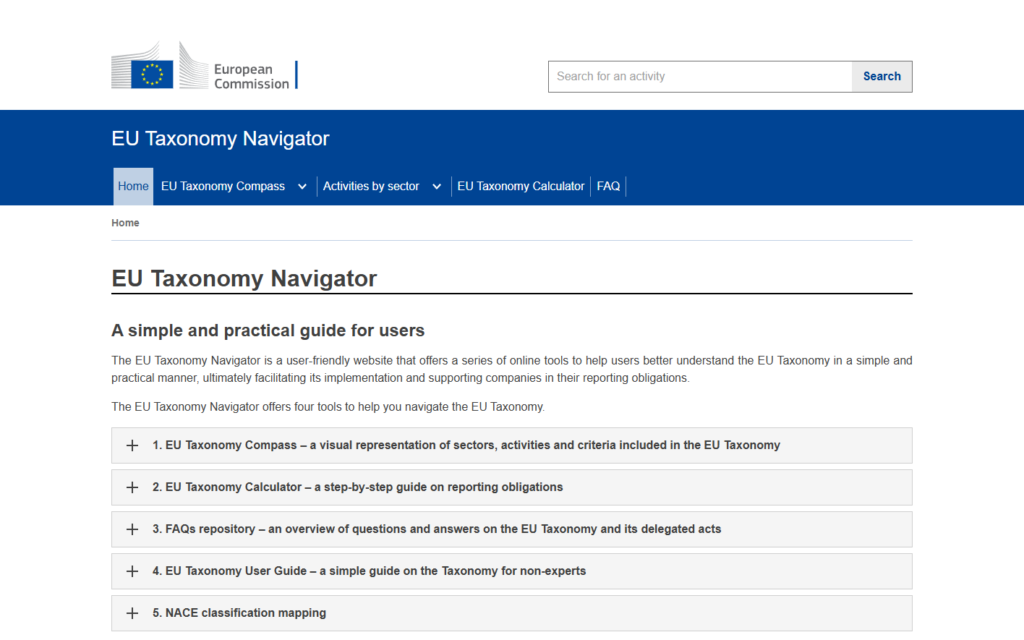
An overview of the EU taxonomy framework and practical tools (like the taxonomy compass and calculator) to help organisations apply and report on sustainability alignment.
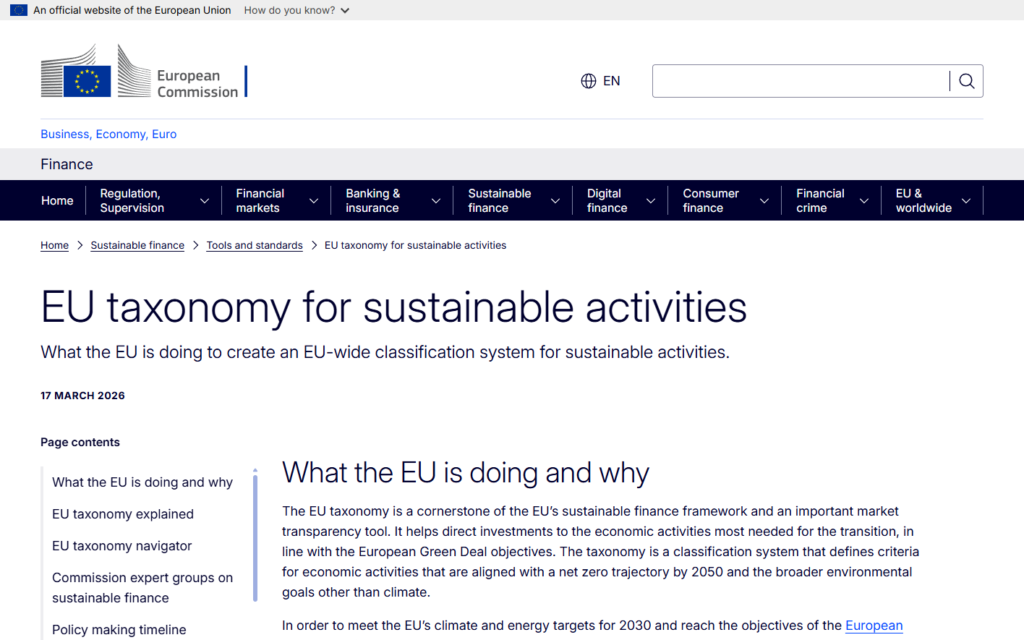
A central hub explaining the EU’s sustainable finance taxonomy, a classification system that defines which economic activities are environmentally sustainable to guide investment and prevent greenwashing.
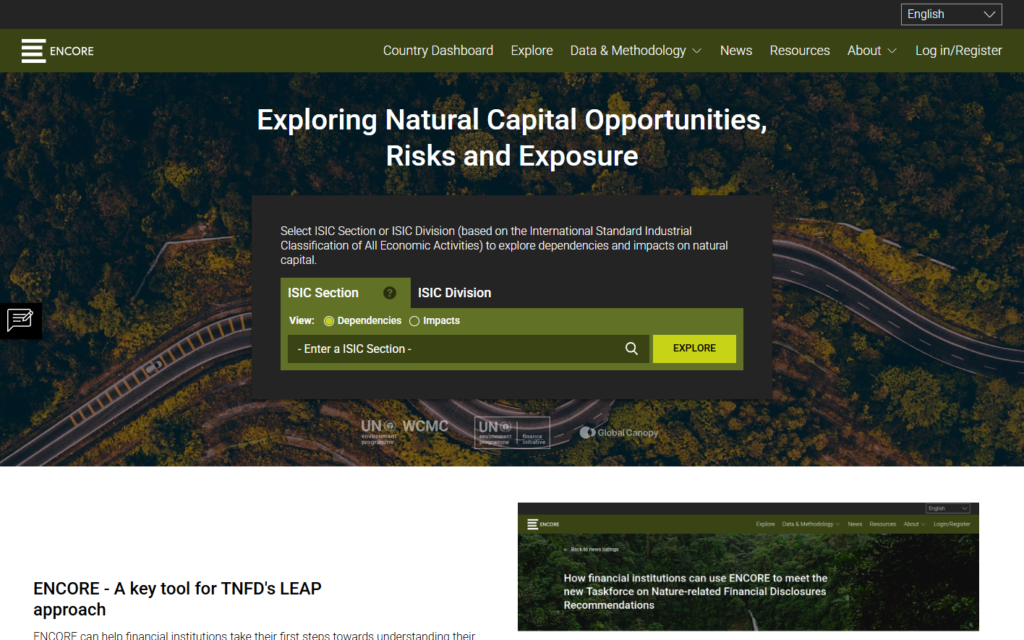
A digital tool that helps financial institutions assess how economic activities depend on and impact nature, supporting better integration of biodiversity and natural capital risks into decision-making.
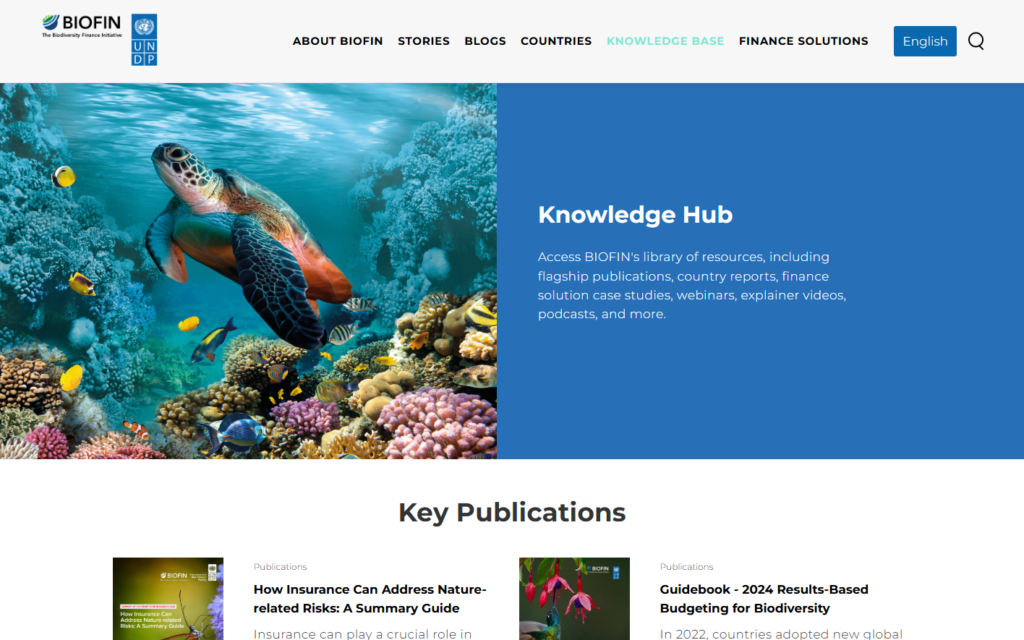
A comprehensive repository of publications, webinars, and guidance developed by the UNDP BIOFIN initiative to support countries and institutions in designing and implementing biodiversity finance solutions.
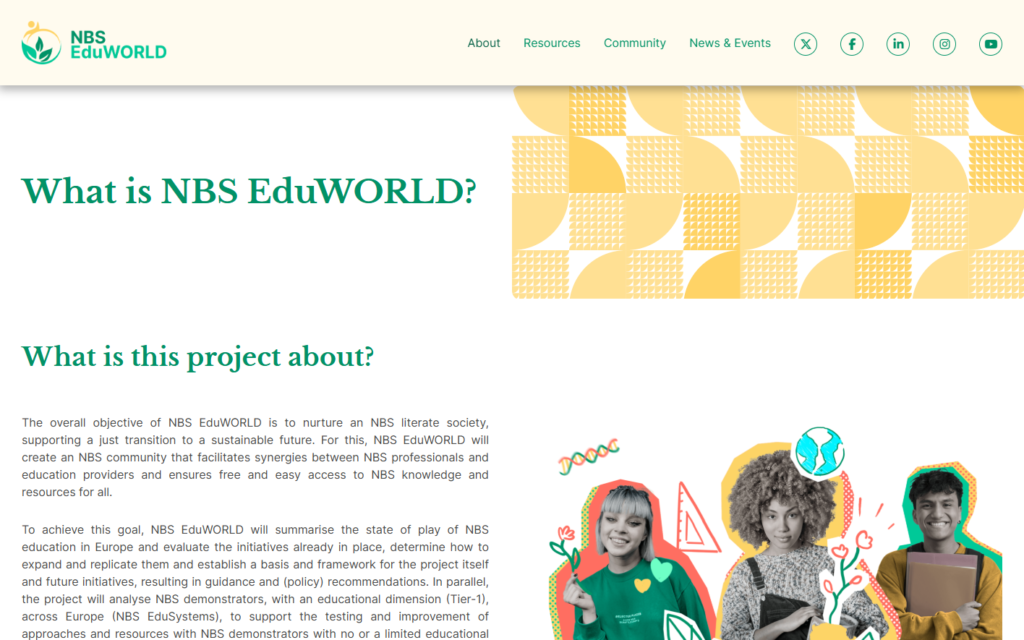
NBS EduWORLD nurtures an NBS literate society, supporting a just transition to a sustainable future. For this, NBS EduWORLD creates an NBS community that facilitates synergies between NBS professionals and education providers and ensures free and easy access to NBS knowledge and resources for all. Funded by the European Union.
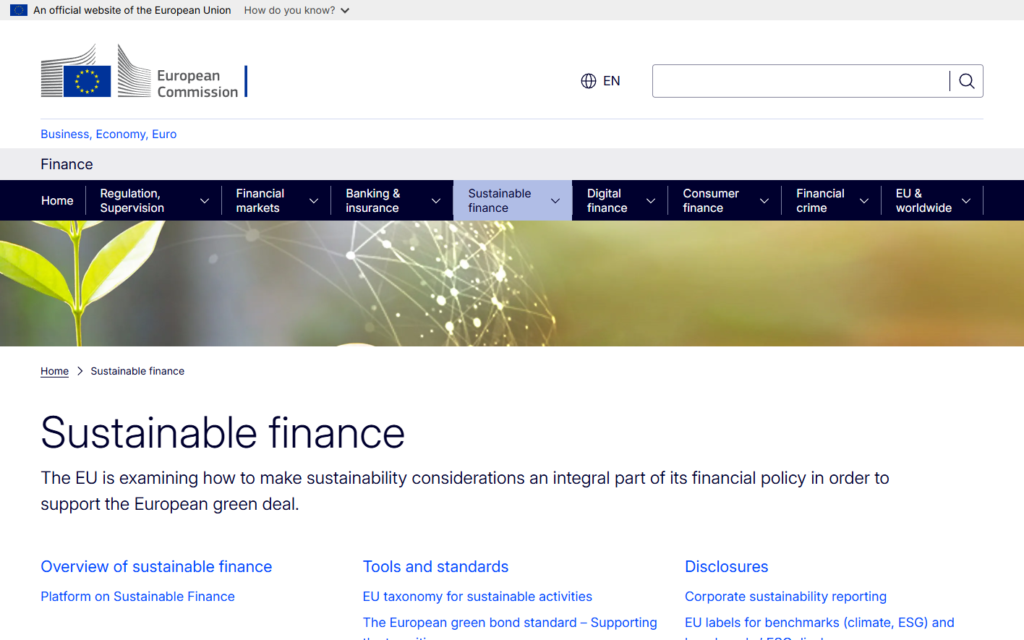
The International Platform on Sustainable Finance creates a forum for dialogue between policymakers, with the aim of increasing the amount of private capital being invested in sustainable investments. Via the sustainable finance platform, the EU is examining how to make sustainability considerations an integral part of its financial policy in order to support the European green deal.
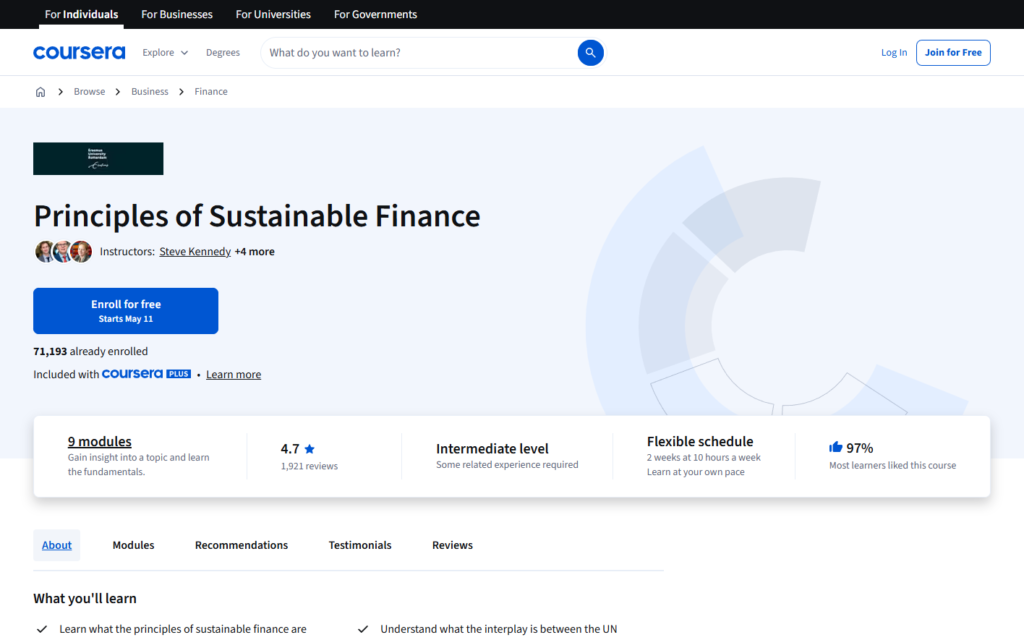
An introductory course covering the fundamentals of sustainability and ESG, and how these frameworks shape business strategy, investment decisions, and financial systems.
Duration: 2 weeks, 10 hours/week
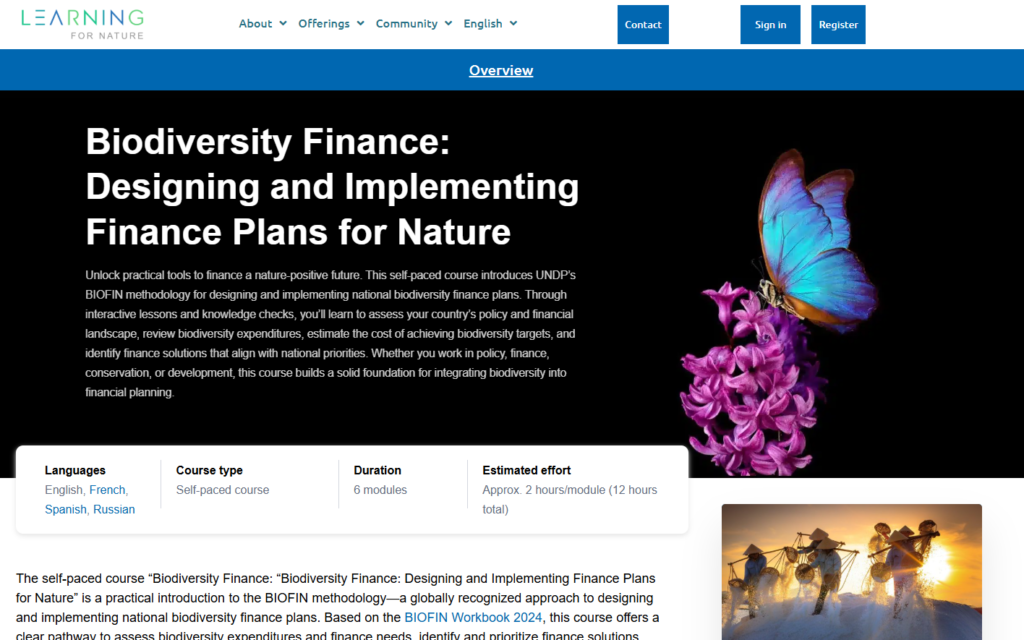
A self-paced course that equips learners with practical skills to understand and design biodiversity finance plans, combining policy, economics, and environmental management approaches.
Duation: 6 modules, 2 hours/module
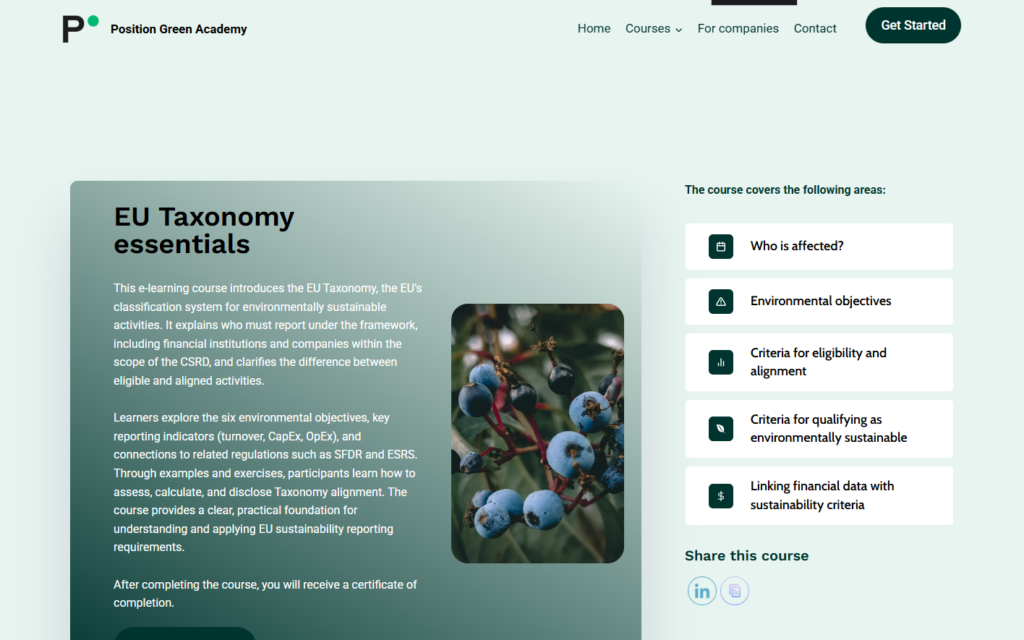
A short, interactive microlearning course that introduces the EU taxonomy, explaining its environmental objectives, criteria, and how organisations can apply it in practice.
Duation: 8 modules, approx 5-10 hours total
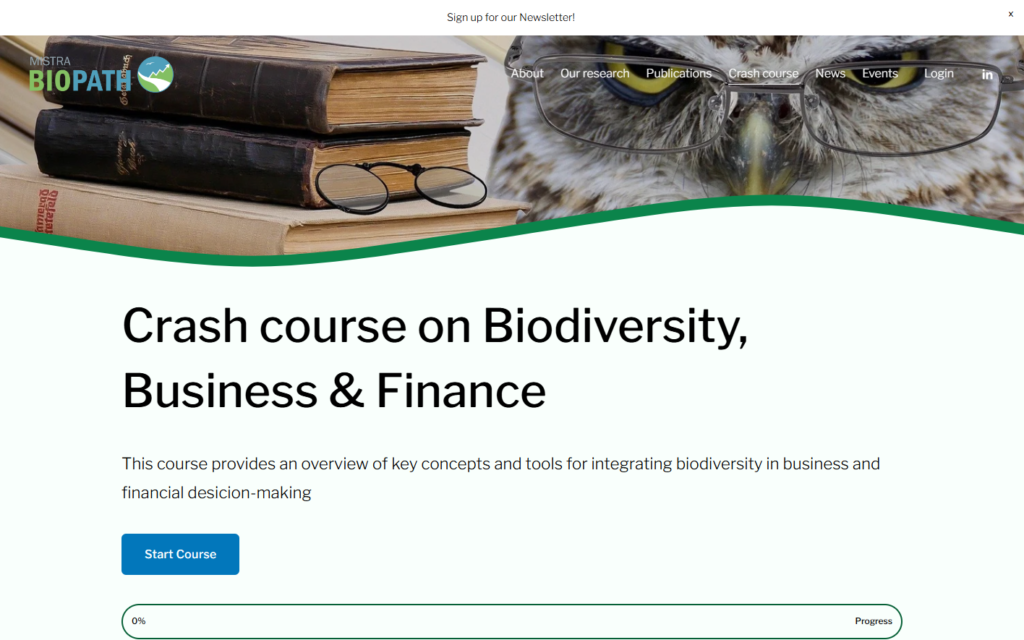
This course provides an overview of key concepts and tools for integrating biodiversity in business and financial decision-making.
Duation: 4 hous
