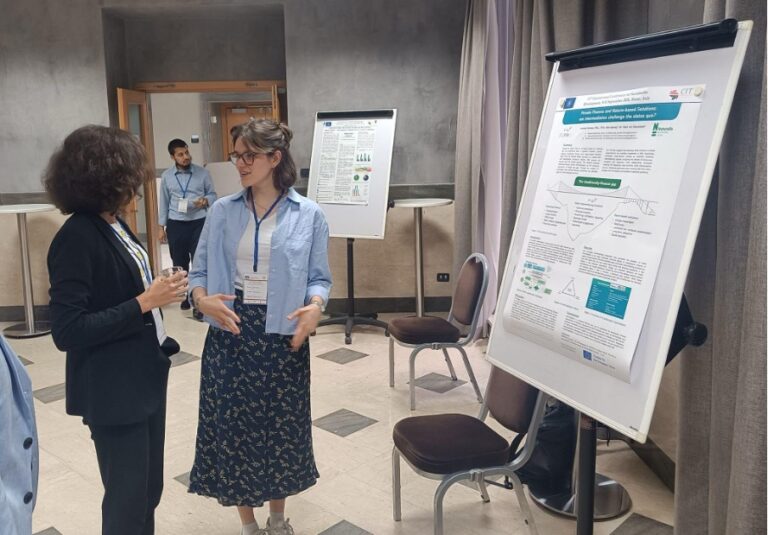
If you had to wait 10 years to receive a financial reward or 10 years to see a local ecosystem fully restored, would you view that waiting time differently?
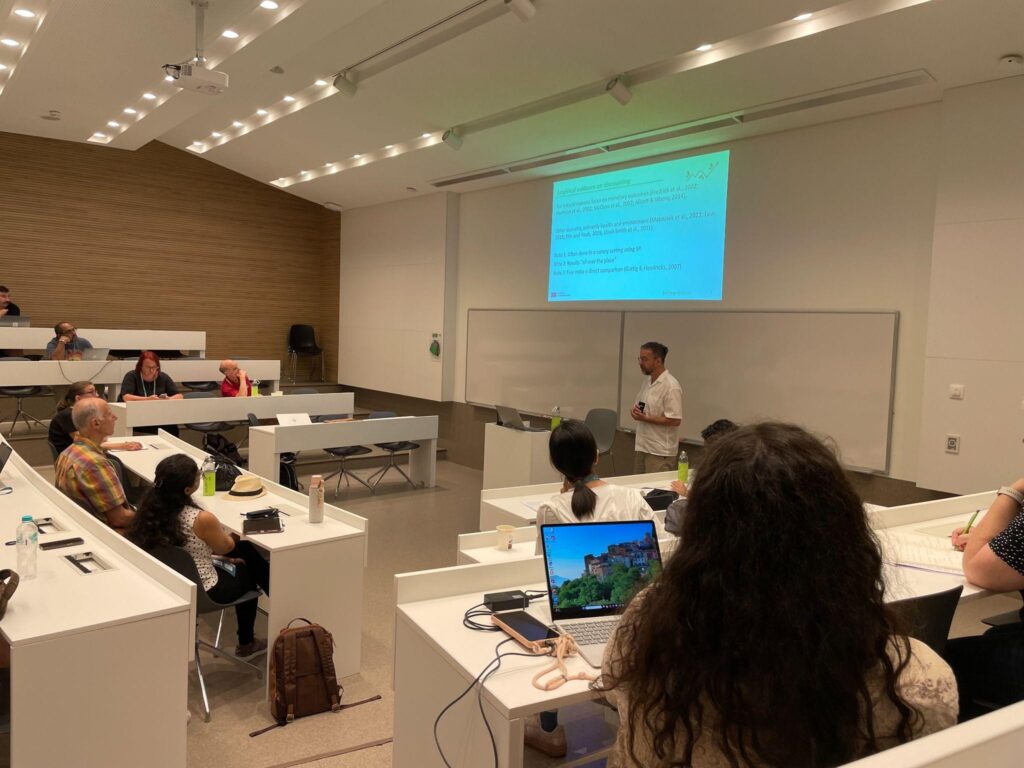
This fascinating question was at the heart of a recent presentation by the BIOFIN-EU project at the 7th World Congress of Environmental and Resource Economists (WCERE 2026). Held from 29 June to 3 July 2026, in Carcavelos, Portugal, the event brought together top environmental economists from around the world.
Fredrik Carlsson, a researcher from University of Gothenburg, representing the BIOFIN-EU project took the stage to share the findings of a new study: “Do People Discount Biodiversity Like Money?“. The presentation sparked a fantastic discussion among the academic experts in attendance, providing valuable feedback.
But why is the way we fund nature recovery a game-changer?
To understand how ordinary citizens value future environmental benefits, the research team looked at a real-world scenario: restoring the heavily polluted seabed of Malmö harbour in Sweden. The heavily polluted sediment can be sand-capped to encapsulate the sediment, which makes it possible for eelgrass to grow back, bringing marine life with it. Eelgrass is crucial for biodiversity, improving water quality, and even capturing carbon.
However, ecological restoration takes time. The researchers asked citizens how much they were willing to pay in taxes today for a successful restoration that would take varying amounts of time to complete: 2 years (by planting seedlings), 10 years (by planting seeds), or 18 years (through natural recovery). They then compared these answers to how people valued waiting for a cash reward over the exact same timeframes.
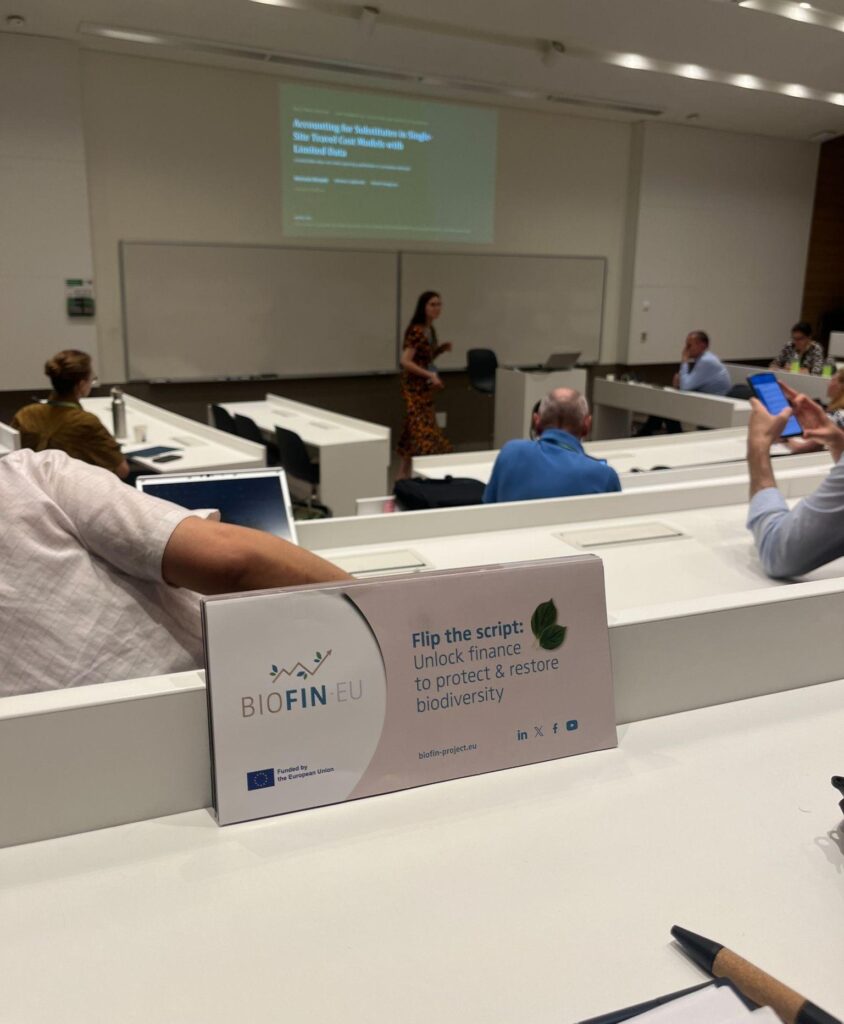
The findings showed that while people’s patience for receiving a financial reward remains relatively stable over long periods, their patience for environmental recovery drops significantly when the wait extends into the 10-to-18-year timeframe. Put simply: citizens are much less willing to wait two decades for an ecosystem to recover than they are to wait for a financial payout.
At BIOFIN-EU, our core mission is to unlock mainstream finance to protect and restore biodiversity. But to do this effectively, we need accurate financial models.
This research highlights a major flaw in traditional economics: we cannot simply take standard monetary formulas and blindly apply them to environmental projects. If we want to design successful policies and attract real investment for nature-based solutions, our models must reflect how society actually perceives and values long-term environmental benefits.