On World Wetlands Day, February 2, we celebrate the vital role of wetlands for people and nature. This date commemorates the adoption in 1971 of the Convention on Wetlands, an international treaty that has guided the wise use and protection of these rich and complex ecosystems ever since.
Wetlands, Among the Most Valuable Ecosystems on Earth
Wetlands encompass many landscapes across the planet. They include inland marshes, floodplains and peatlands, coastal estuaries, mangroves and lagoons, river systems and even human-made wetlands shaped by traditional agriculture. These places are not just water-logged lands, they are among the most biodiverse and productive ecosystems on Earth, supporting about 40 percent of all plant and animal species while covering just a small fraction of the globe’s surface.
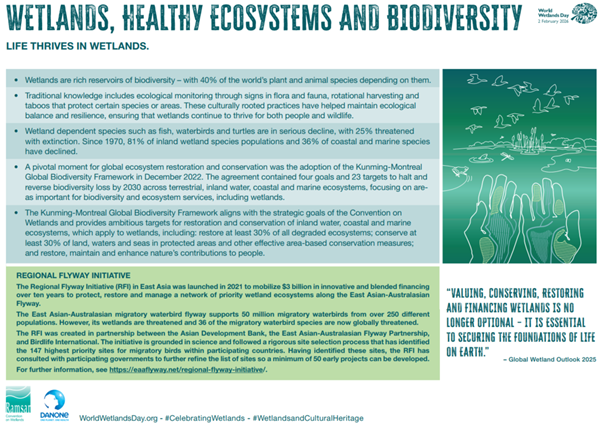
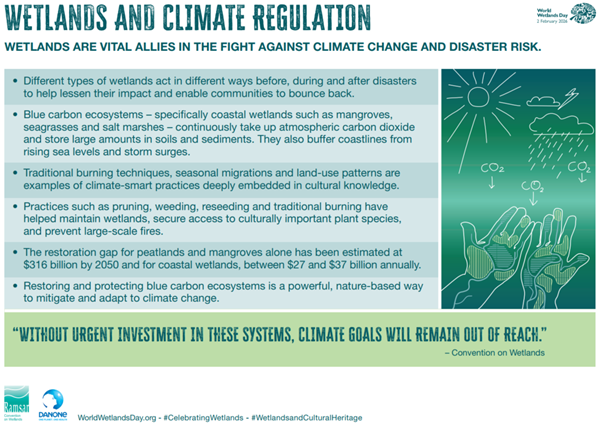
Beyond biodiversity, wetlands deliver essential services that sustain livelihoods and societies. They regulate water cycles and purify freshwater, acting as natural filters that improve water quality for people and ecosystems. They buffer communities against floods and droughts, recharge groundwater supplies, support fisheries and agriculture, and sequester carbon at rates often higher than terrestrial forests.
Wetlands and Cultural Heritage
The 2026 campaign theme “Wetlands and traditional knowledge: Celebrating cultural heritage” highlights the deep connections between wetlands and the knowledge systems of local and Indigenous communities. For millennia, people have lived in harmony with wetland landscapes, developing sustainable practices rooted in heritage, culture and spiritual values that long predate modern conservation science. Recognising these perspectives enriches collective efforts to conserve, restore and sustainably manage wetlands for future generations.
Growing Pressures on Wetland Ecosystems
Despite their immense value, wetlands remain among the world’s most threatened ecosystems. They continue to decline under pressures from unsustainable land-use change, pollution, drainage for agriculture and infrastructure development, invasive species, and the mounting impacts of climate change. Unless we act decisively, the degradation of wetlands will undermine biodiversity, water security and resilience to climate shocks across regions and communities.
Financing Wetland Conservation Through BIOFIN-EU
For BIOFIN-EU, World Wetlands Day is an opportunity to reflect on the role of biodiversity finance in supporting wetland conservation and restoration. Mobilising sustainable finance for wetlands means investing in nature-based solutions that deliver multiple benefits for people, climate and economies. Innovative financing mechanisms, from public-private partnerships and green bonds to ecosystem-service payments, are essential to scale up action where it matters most.
A Shared Investment in the Future
Wetlands are climate allies, biodiversity hotspots and cultural landscapes that connect people to water and nature in profound ways. Observing World Wetlands Day reminds us that protecting these ecosystems is not just an environmental imperative, it is a shared investment in resilient, equitable and sustainable futures